.jpg)
Ya-Fu LeeProfessor
E - Mail
yafulee@mail.ncku.edu.tw
Office Phone
+886-6-275-7575 ext. 58115
Laboratory Phone
58104 or 58114轉54
Highest Education
Ph.D. in Ecology and Evolutionary Biology, University of Tennessee
M.S. in Ecology, University of Tennessee
B.S. in Transportation Engineering and Management, National Chiao Tung University
M.S. in Ecology, University of Tennessee
B.S. in Transportation Engineering and Management, National Chiao Tung University

Brief Biography
07/2015–09/2015 Visiting Scholar, Department of Biology, University of Southern Denmark
06/2012–09/2012 Visiting Scholar, Tropical Biosphere Research Center, University of the Ryukyus, Japan
08/2010–Present Full Professor, Department of Life Sciences, National Cheng Kung University
06/2009–09/2009 Visiting Scholar, Institute of Experimental Ecology, Ulm University, Germany, and Smithsonian Tropical Research Institute, USA
08/2005–07/2010 Associate Professor, Department of Life Sciences, National Cheng Kung University
06/2005–09/2005 Visiting Scholar, Iriomote Station, Research Institute for Humanity and Nature, Japan
08/2003–07/2005 Assistant Professor, Department of Life Sciences, National Cheng Kung University
08/2002–07/2003 Assistant Professor, Department of Natural Resources, National Ilan University
01/2001–08/2002 Postdoctoral Researcher, Forest Insects and Wildlife Laboratory, Division of Forest Protection, Taiwan Forestry Research Institute
01/2000–12/2008 Scientific Advisory Committee Member, Bat Conservation International (BCI)
01/2000–12/2000 Postdoctoral Research Fellow, Avian Ecology Laboratory, Biodiversity Research Center, Academia Sinica
06/2012–09/2012 Visiting Scholar, Tropical Biosphere Research Center, University of the Ryukyus, Japan
08/2010–Present Full Professor, Department of Life Sciences, National Cheng Kung University
06/2009–09/2009 Visiting Scholar, Institute of Experimental Ecology, Ulm University, Germany, and Smithsonian Tropical Research Institute, USA
08/2005–07/2010 Associate Professor, Department of Life Sciences, National Cheng Kung University
06/2005–09/2005 Visiting Scholar, Iriomote Station, Research Institute for Humanity and Nature, Japan
08/2003–07/2005 Assistant Professor, Department of Life Sciences, National Cheng Kung University
08/2002–07/2003 Assistant Professor, Department of Natural Resources, National Ilan University
01/2001–08/2002 Postdoctoral Researcher, Forest Insects and Wildlife Laboratory, Division of Forest Protection, Taiwan Forestry Research Institute
01/2000–12/2008 Scientific Advisory Committee Member, Bat Conservation International (BCI)
01/2000–12/2000 Postdoctoral Research Fellow, Avian Ecology Laboratory, Biodiversity Research Center, Academia Sinica
Research Areas
Research Expertise: Behavioral Ecology, Community Ecology, Evolutionary Ecology, Biodiversity and Conservation Ecology, Agricultural and Urban-Rural Ecology.
Research Directions:
The Behavioral and Evolutionary Ecology Laboratory (BEE Lab) is abbreviated as BEE Lab, but this does not mean we keep bees or engage in honey-related industries! Our research interests lie broadly in evolutionary ecology, focusing on interspecific and intraspecific individual variation, such as behavior, life history, morphology, physiology, developmental status, and kinship, and their dynamic relationships with populations and the composition and structure of communities under evolutionary mechanisms and various ecological processes (such as competition, predation, parasitism, and mutualism). The study organisms are mainly terrestrial vertebrates and insects. The major research directions include: (1) In behavioral, sensory, and evolutionary ecology, we investigate the ecology and behavior of Chiroptera (bats) and birds and their relationships with morphological function, exploring resource acquisition and utilization patterns of insectivorous and herbivorous vertebrates, as well as their interactions with prey and natural enemies; (2) Establishing the interface between behavioral ecology and community ecology by analyzing ecological processes affecting animal community composition, structure, and relative abundance and their relative importance, and examining the influence of cross-trophic interspecific interactions (e.g., insectivorous animals–insects–plants and herbivores–plants) on community composition, food web structure, and stability; and (3) Starting from basic research, exploring its integration with biodiversity and conservation ecology research, including urban environments, agricultural environments and agricultural resources, restoration ecology, and applications related to environmental change issues.
Current Research Topics in the Laboratory:
(1) Animal behavioral variation, exploratory behavior, individual condition, personality and behavioral syndromes, effects of parasites on behavior and personality, and their ecological associations.
(2) Community structure of Chiroptera; spatial, habitat, and resource utilization patterns and variation; sensory ecology and environment; environmental change and environmental impacts (e.g., wind turbine development) and their conservation relevance.
(3) Resource utilization patterns of frugivorous animals (flying foxes, birds, macaques), interactions with and impacts on plant resources, and their conservation relevance.
(4) Diversity, community composition, habitat and nest-site selection, resource utilization patterns, parental care behavior, and ecological associations with environmental and disturbance factors in sympatric animals (birds, lizards, amphibians, cicadas).
(5) Agricultural and restoration ecology.
(6) Social behavior and male paternal relationships in macaques.
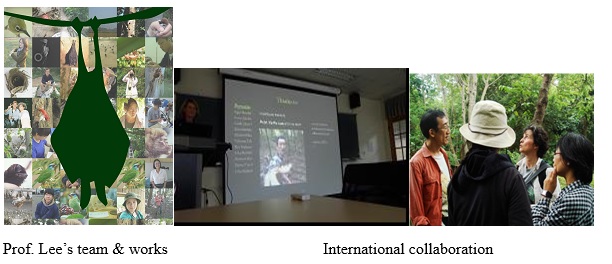
Domestic and International Collaborative Institutions:
Department of Ecology and Evolutionary Biology, The University of Tennessee, USA;
Field Museum of Natural History, Chicago, USA;
Research Institute for Humanity and Nature, Kyoto, and the University of the Ryukyus, Japan; Institute of Experimental Ecology, University of Ulm, Germany;
Smithsonian Tropical Research Institute, Panama; Department of Biology,
Southern Denmark University, Denmark.
Biodiversity Research Center, Academia Sinica;
Institute of Ecology and Evolutionary Biology, National Taiwan University;
Department of Forestry, National Chung Hsing University;
Taiwan Forestry Research Institute (Division of Forest Protection, Fushan Research Center, Hengchun Research Center, and Liouguei Research Center);
Endemic Species Research Institute, Council of Agriculture, Executive Yuan.
 >
>
Research Directions:
The Behavioral and Evolutionary Ecology Laboratory (BEE Lab) is abbreviated as BEE Lab, but this does not mean we keep bees or engage in honey-related industries! Our research interests lie broadly in evolutionary ecology, focusing on interspecific and intraspecific individual variation, such as behavior, life history, morphology, physiology, developmental status, and kinship, and their dynamic relationships with populations and the composition and structure of communities under evolutionary mechanisms and various ecological processes (such as competition, predation, parasitism, and mutualism). The study organisms are mainly terrestrial vertebrates and insects. The major research directions include: (1) In behavioral, sensory, and evolutionary ecology, we investigate the ecology and behavior of Chiroptera (bats) and birds and their relationships with morphological function, exploring resource acquisition and utilization patterns of insectivorous and herbivorous vertebrates, as well as their interactions with prey and natural enemies; (2) Establishing the interface between behavioral ecology and community ecology by analyzing ecological processes affecting animal community composition, structure, and relative abundance and their relative importance, and examining the influence of cross-trophic interspecific interactions (e.g., insectivorous animals–insects–plants and herbivores–plants) on community composition, food web structure, and stability; and (3) Starting from basic research, exploring its integration with biodiversity and conservation ecology research, including urban environments, agricultural environments and agricultural resources, restoration ecology, and applications related to environmental change issues.
Current Research Topics in the Laboratory:
(1) Animal behavioral variation, exploratory behavior, individual condition, personality and behavioral syndromes, effects of parasites on behavior and personality, and their ecological associations.
(2) Community structure of Chiroptera; spatial, habitat, and resource utilization patterns and variation; sensory ecology and environment; environmental change and environmental impacts (e.g., wind turbine development) and their conservation relevance.
(3) Resource utilization patterns of frugivorous animals (flying foxes, birds, macaques), interactions with and impacts on plant resources, and their conservation relevance.
(4) Diversity, community composition, habitat and nest-site selection, resource utilization patterns, parental care behavior, and ecological associations with environmental and disturbance factors in sympatric animals (birds, lizards, amphibians, cicadas).
(5) Agricultural and restoration ecology.
(6) Social behavior and male paternal relationships in macaques.
Domestic and International Collaborative Institutions:
Department of Ecology and Evolutionary Biology, The University of Tennessee, USA;
Field Museum of Natural History, Chicago, USA;
Research Institute for Humanity and Nature, Kyoto, and the University of the Ryukyus, Japan; Institute of Experimental Ecology, University of Ulm, Germany;
Smithsonian Tropical Research Institute, Panama; Department of Biology,
Southern Denmark University, Denmark.
Biodiversity Research Center, Academia Sinica;
Institute of Ecology and Evolutionary Biology, National Taiwan University;
Department of Forestry, National Chung Hsing University;
Taiwan Forestry Research Institute (Division of Forest Protection, Fushan Research Center, Hengchun Research Center, and Liouguei Research Center);
Endemic Species Research Institute, Council of Agriculture, Executive Yuan.
>Awards
2023 Distinguished Teacher Award for Teaching Innovation and University Social Responsibility, National Cheng Kung University, Academic Year 2022
2022 Distinguished Teacher Award for Teaching Innovation and University Social Responsibility, College of Bioscience and Biotechnology, National Cheng Kung University, Academic Year 2021
2021 Research Creativity Award for Advising Students in the Ministry of Science and Technology Undergraduate Research Project Program 2020
2021 Outstanding Mentor Award, National Cheng Kung University, Academic Year 2020
2016 Distinguished Teaching Award, National Cheng Kung University, Academic Year 2015
2012 Academic Research Fellowship for Foreign Scholars, Tropical Biosphere Research Center, University of the Ryukyus, Japan
2012 Outstanding Biological Research Award, Chinese Biological Society
2011 Excellent Teaching Award, National Cheng Kung University, Academic Year 2010
2010 Outstanding Mentor Award, National Cheng Kung University, Academic Year 2009
2009 Overseas Short-Term Research Fellowship for Scientists and Technicians, National Science Council, 47th Session
2009 Excellent Teaching Award, National Cheng Kung University, Academic Year 2008
2007 Excellent Teaching Award, National Cheng Kung University, Academic Year 2006
2005 Academic Research Fellowship for Foreign Scholars, Research Institute for Humanity and Nature, Japan
2022 Distinguished Teacher Award for Teaching Innovation and University Social Responsibility, College of Bioscience and Biotechnology, National Cheng Kung University, Academic Year 2021
2021 Research Creativity Award for Advising Students in the Ministry of Science and Technology Undergraduate Research Project Program 2020
2021 Outstanding Mentor Award, National Cheng Kung University, Academic Year 2020
2016 Distinguished Teaching Award, National Cheng Kung University, Academic Year 2015
2012 Academic Research Fellowship for Foreign Scholars, Tropical Biosphere Research Center, University of the Ryukyus, Japan
2012 Outstanding Biological Research Award, Chinese Biological Society
2011 Excellent Teaching Award, National Cheng Kung University, Academic Year 2010
2010 Outstanding Mentor Award, National Cheng Kung University, Academic Year 2009
2009 Overseas Short-Term Research Fellowship for Scientists and Technicians, National Science Council, 47th Session
2009 Excellent Teaching Award, National Cheng Kung University, Academic Year 2008
2007 Excellent Teaching Award, National Cheng Kung University, Academic Year 2006
2005 Academic Research Fellowship for Foreign Scholars, Research Institute for Humanity and Nature, Japan